
Golf Simulator Blog
Free tips & advice for your home golf simulator
Golf Simulator Impact Screens: Everything You Need to Know
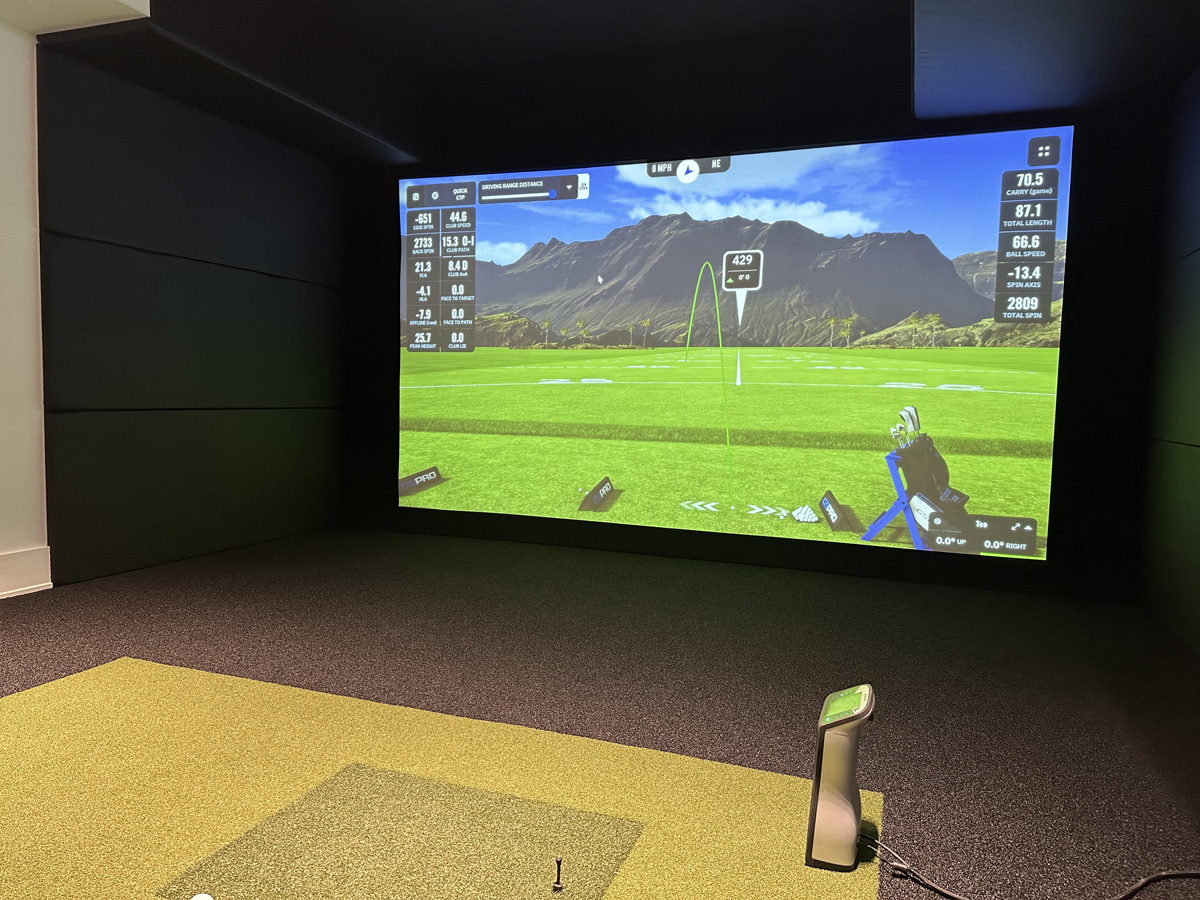
The impact screen is one of the biggest parts of any home golf simulator, both literally and visually. It is where every shot ends up, where the projected course comes to life, and where a huge part of the simulator experience is either elevated or compromised. A good screen needs to do much more than stop a golf ball. It has to work with the projector, handle thousands of shots, manage sound and ball return, and fit the room in a way that looks intentional. When the screen is planned correctly, the simulator feels more polished, more immersive, and simply better to use.
What Golf Simulator Impact Screens Actually Do
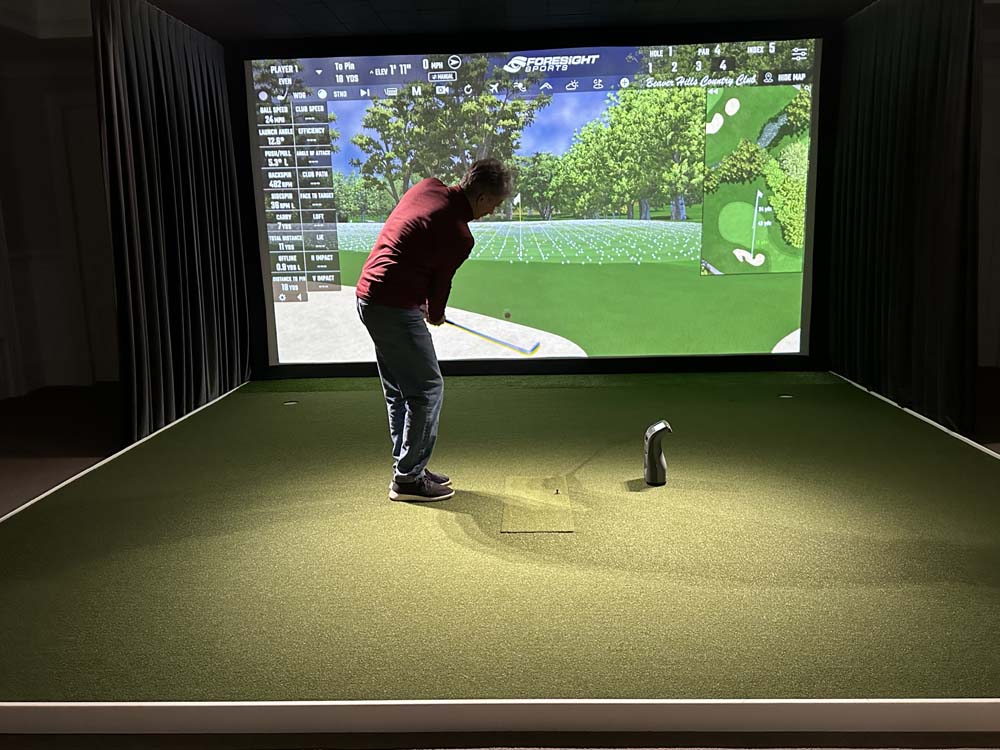
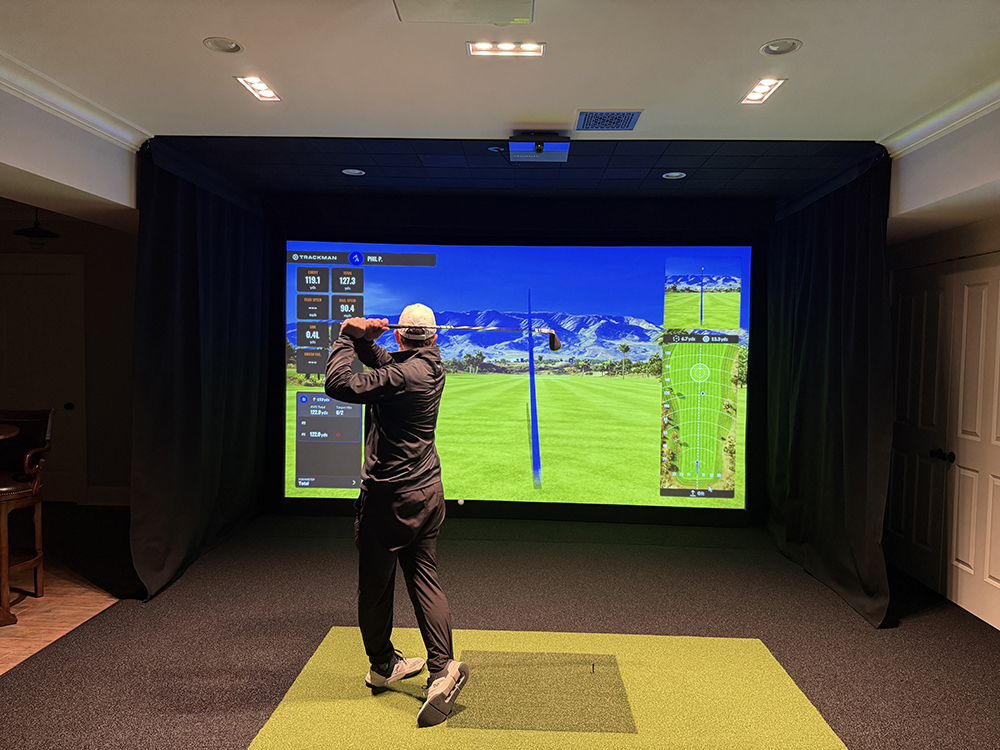
At first glance, an impact screen can look like a large white projection surface. In reality, it is doing several jobs at once. It needs to absorb the energy of a real golf ball, provide a clean surface for the projected image, and help control how the ball reacts after impact. That combination is what separates an actual simulator screen from a standard projector screen.
They Take the Full Force of Every Shot
A golf ball can hit the screen with serious speed, especially when someone is swinging a driver. The screen needs enough strength to take repeated impacts without quickly stretching, tearing, or wearing through. At the same time, it cannot feel like hitting into a rigid wall. The material needs a controlled amount of give so it can absorb the shot and reduce how aggressively the ball comes back toward the player.
They Are Also Your Projection Surface
The same material that stops the golf ball is also responsible for displaying the course, practice range, data, and simulator software. A smooth surface with the right amount of tension helps the projected image look sharper and more even. Wrinkles, loose areas, and poor screen fit can all become much more noticeable once a bright projector is aimed at the surface.
They Work as Part of the Entire System
The screen affects more than the shot itself. It has an impact on sound, image quality, safety, and even how finished the room looks. That is why we look at the screen as part of the entire system rather than an isolated piece of equipment. Our guide to golf simulator components explains how the screen works alongside the launch monitor, projector, computer, hitting surface, and the rest of the room.
Golf Simulator Impact Screens and Image Quality
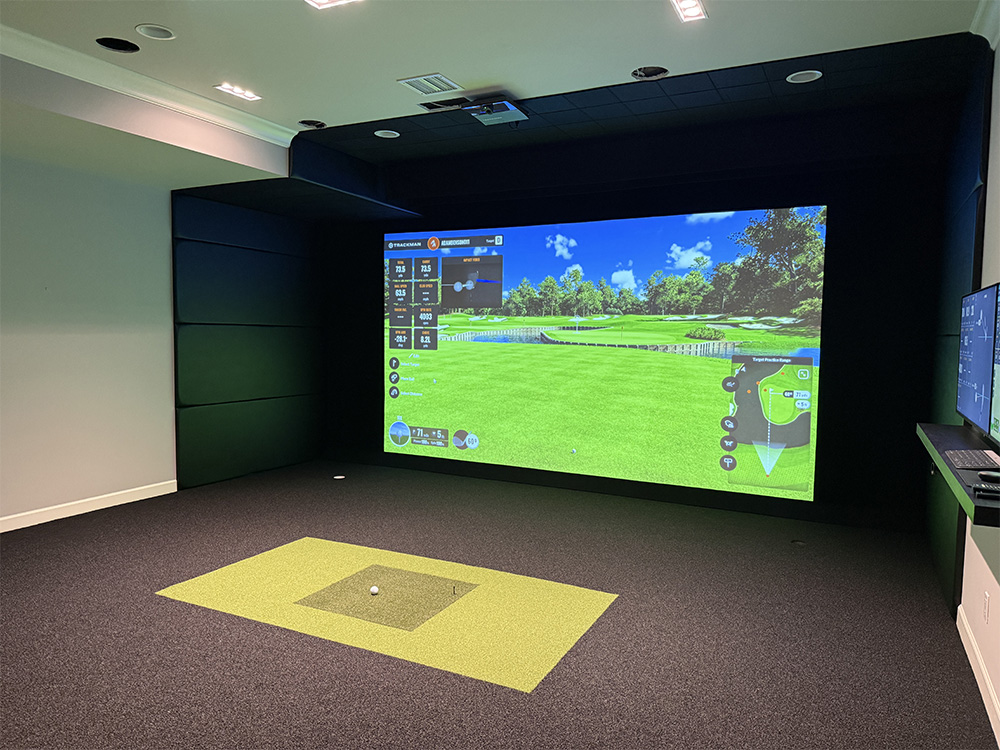
If you are building a simulator that will take up a major wall in your home, the picture should look good. Screen quality, tension, projector placement, room lighting, and the dimensions of the viewing area all work together to determine what you actually see when you step up to hit.
Surface Quality Makes a Difference
A clean and consistent screen surface gives the projector a better canvas. The goal is a bright, even picture without distracting waves or visible texture taking over the image. The simulator does not need to feel like a commercial movie theater, but it should be clear enough that the course feels immersive and your data is easy to read from the hitting area.
Tension Helps Keep the Picture Clean
A screen that is too loose can develop wrinkles and movement that become obvious during use. A screen that is pulled too aggressively can change the way it absorbs impact. Good installation is about finding the right balance. The screen should stay visually clean while still having enough movement to safely absorb a golf ball.
Screen Size Has to Work With the Room
Bigger is not automatically better. The screen needs to make sense for the available width, ceiling height, hitting position, projector, and preferred image shape. A properly proportioned screen can make the experience feel much more immersive. If you are still figuring out the space itself, our guide to golf simulator room dimensions explains the room measurements that matter most.
Durability, Noise, and Ball Return
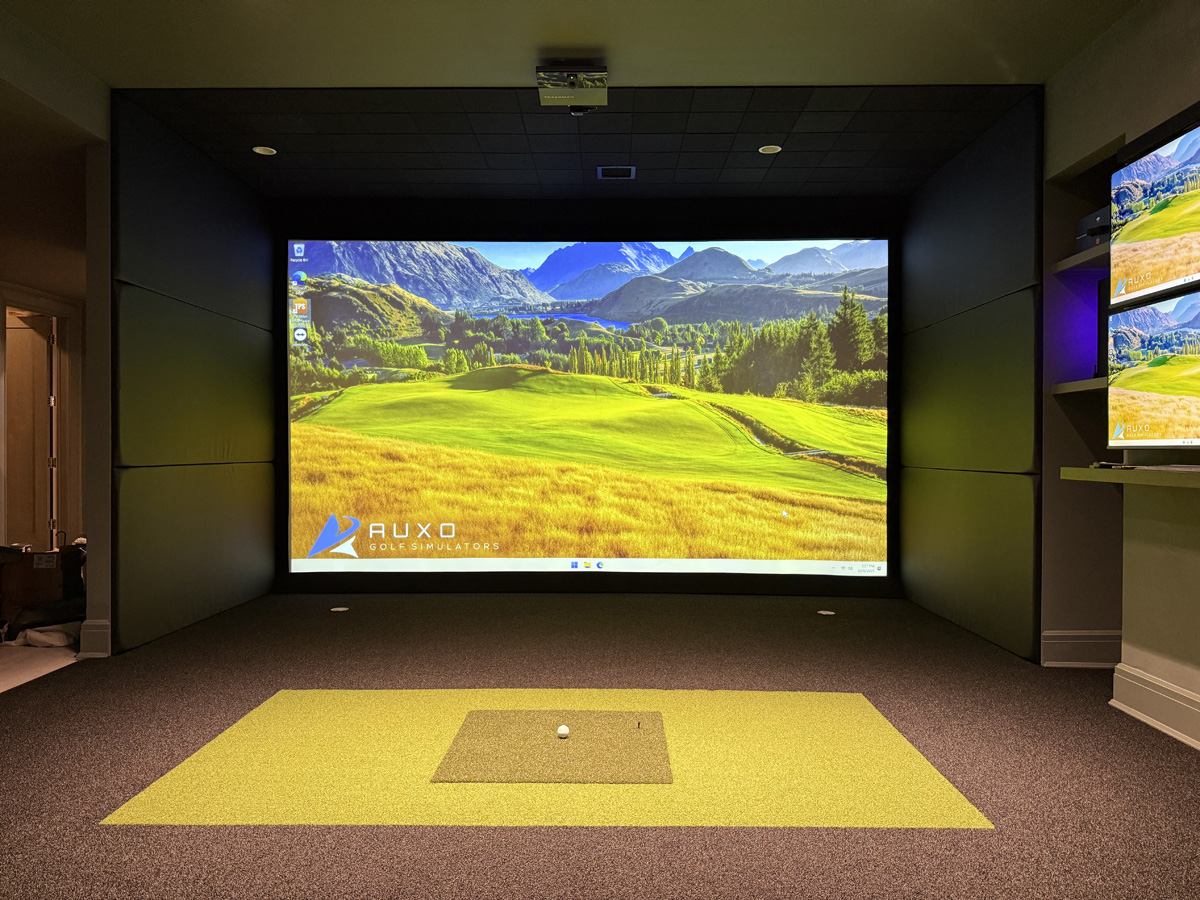
A screen can look great on day one, but the real test is what happens after months and years of use. This is where details that are difficult to notice in a photo can make a big difference once you actually start using the simulator regularly.
Durability Is About Repeated Use
One shot is easy. Thousands of shots in the same general area are where screen quality starts to matter. Golfers naturally create a concentrated impact zone around the center portion of the screen. The material and installation need to account for that repeated use so the screen continues to perform and look good instead of quickly becoming the weak point in the room.
The Screen Plays a Role in Sound
Indoor golf is not silent. There is the club striking the ball, the ball hitting the screen, and sound reflecting around the room. The screen can influence how sharp or muted that impact sounds, but it is only one part of the acoustic picture. Wall treatments, padding, flooring, room shape, and surrounding finishes all contribute. If sound is a major concern, our guide on how to soundproof a home golf simulator room goes deeper into the rest of the space.
Ball Return Should Feel Controlled
The ball should lose enough energy at the screen that the return feels predictable and comfortable. Too much rebound can become annoying and, in a poorly planned room, unsafe. The screen, its mounting method, the space behind it, and the surrounding protection all influence what happens after impact. These are the kinds of details we discuss in our guide to golf simulator design decisions that impact performance.
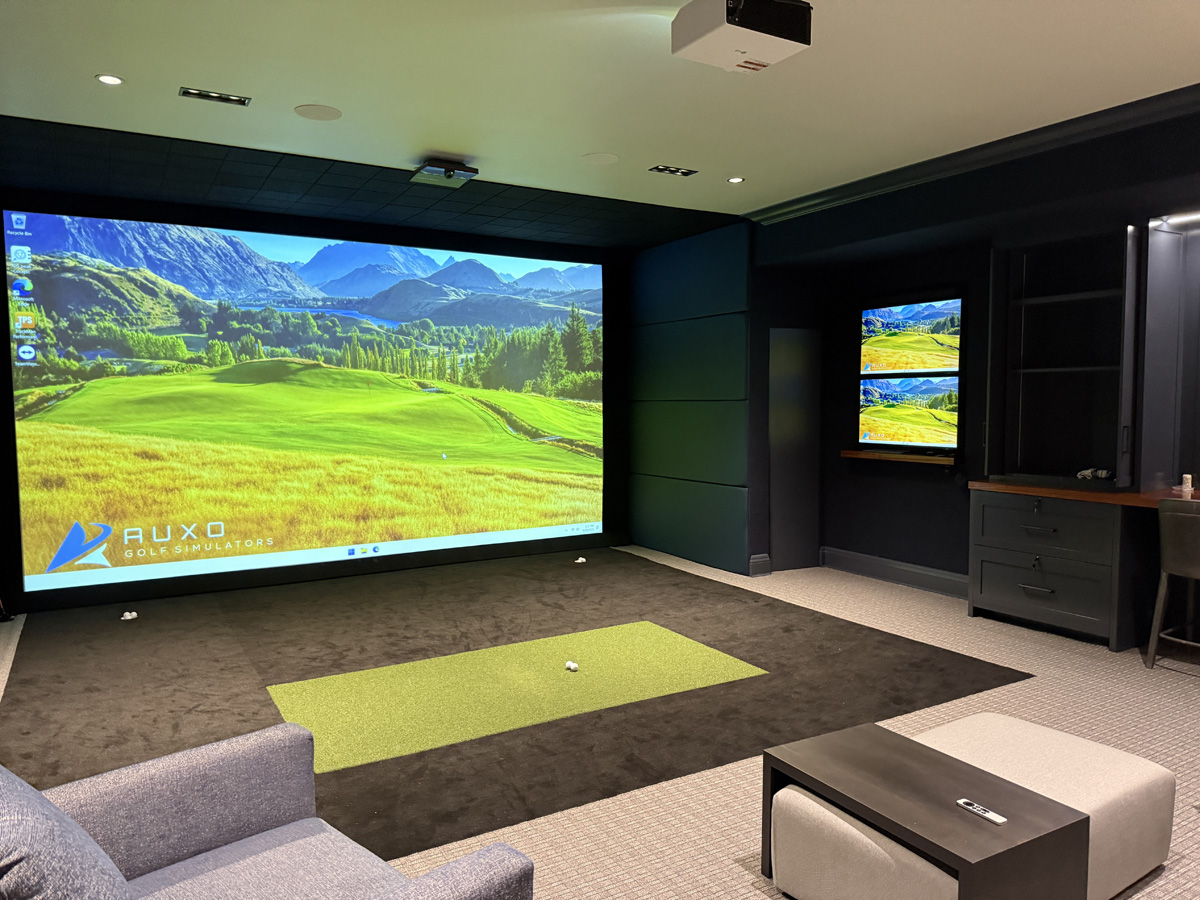
Fixed and Retractable Golf Simulator Impact Screens
Not every simulator room has to work the same way. Some homeowners want a dedicated golf room where the screen stays in place all the time. Others want the simulator to share space with a home theater, family room, bonus room, or another activity. That is where the difference between fixed and retractable screen setups becomes important.
Fixed Screens Work Well in Dedicated Rooms
A fixed screen makes sense when golf is one of the main purposes of the room. The screen can be integrated directly into the enclosure and designed around the exact dimensions of the space. This gives us a lot of control over the finished appearance, screen tension, padding, projector image, and surrounding architecture.
Retractable Screens Give the Room More Flexibility
A retractable golf simulator screen can open the room up for other uses when golf is not being played. Depending on the layout, the screen can be raised to reveal another part of the room or simply remove the simulator screen from view. That can be a great option when the homeowner wants a serious golf setup without permanently dedicating the entire room to golf.
The important part is planning that flexibility from the beginning. A retractable screen still needs to work safely with the hitting area, projector, surrounding protection, and other simulator components. It should feel like an intentional part of the space rather than something added later. This is especially useful in spaces designed around both golf and entertainment. Our guide to designing a golf simulator that doubles as a media room shows how those uses can work together.

How the Impact Screen Changes the Look of the Room
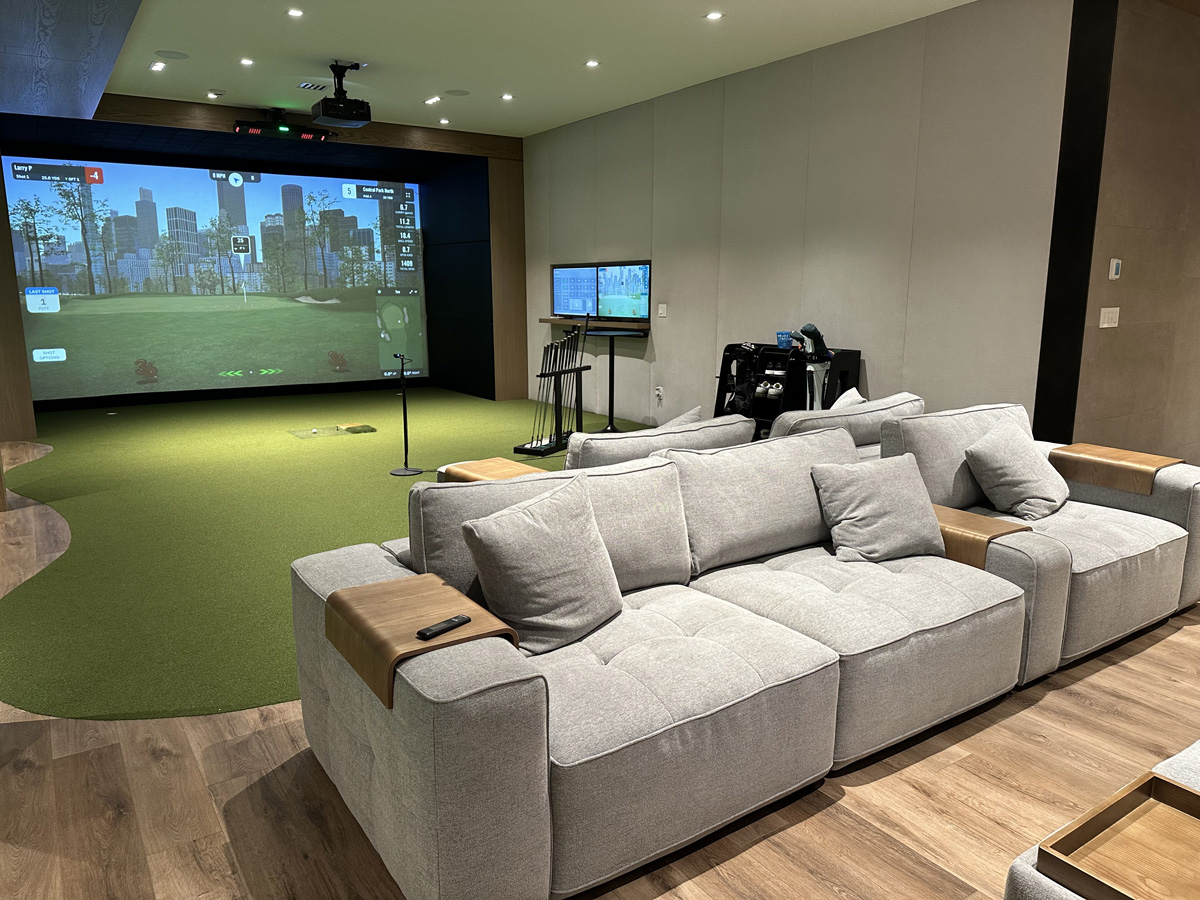
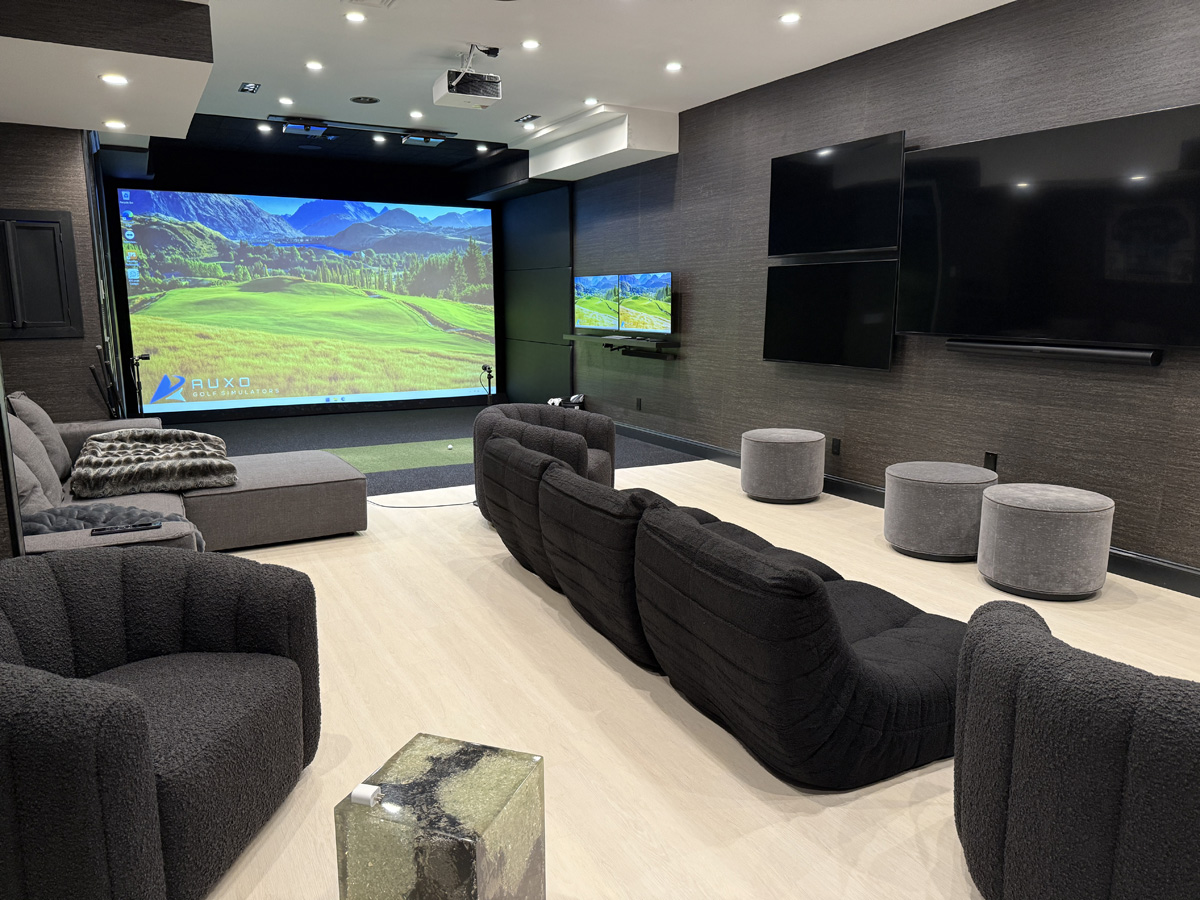
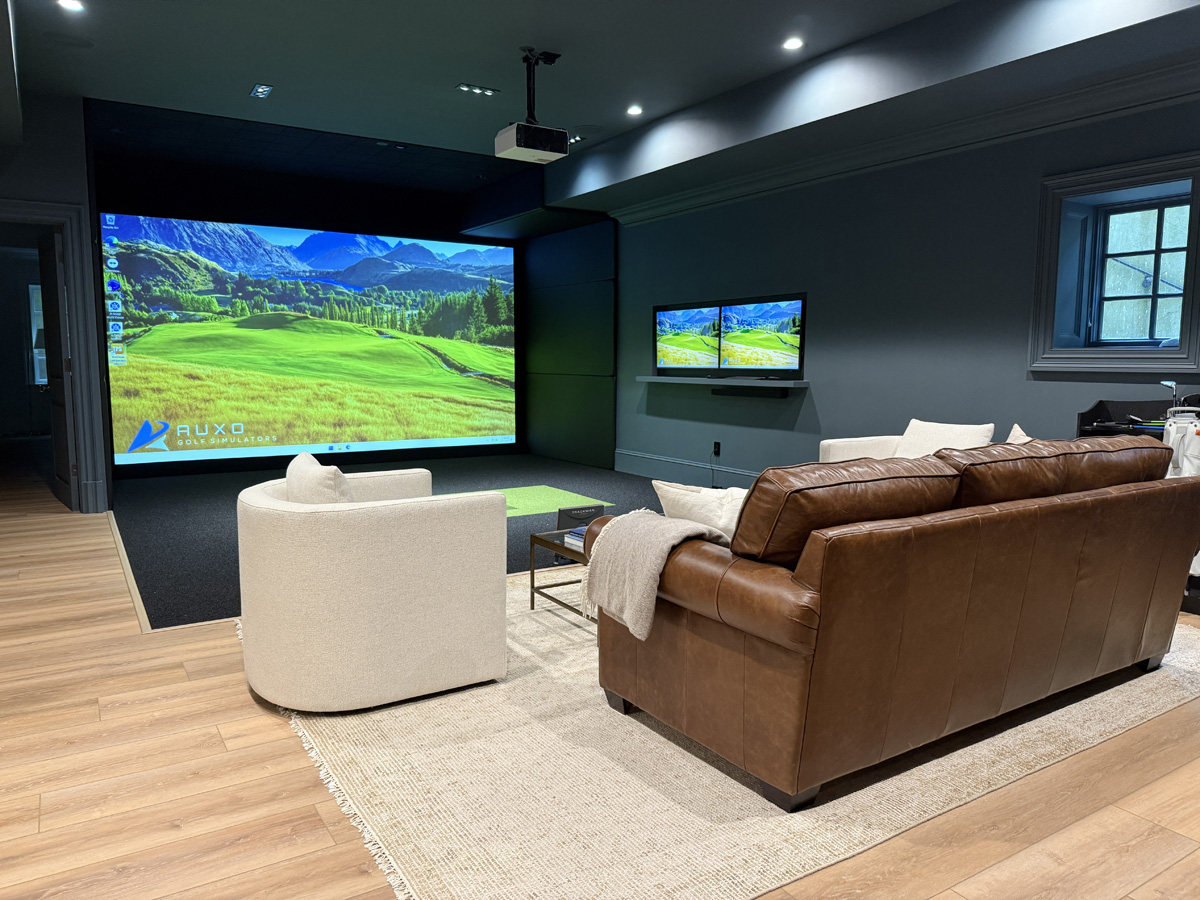
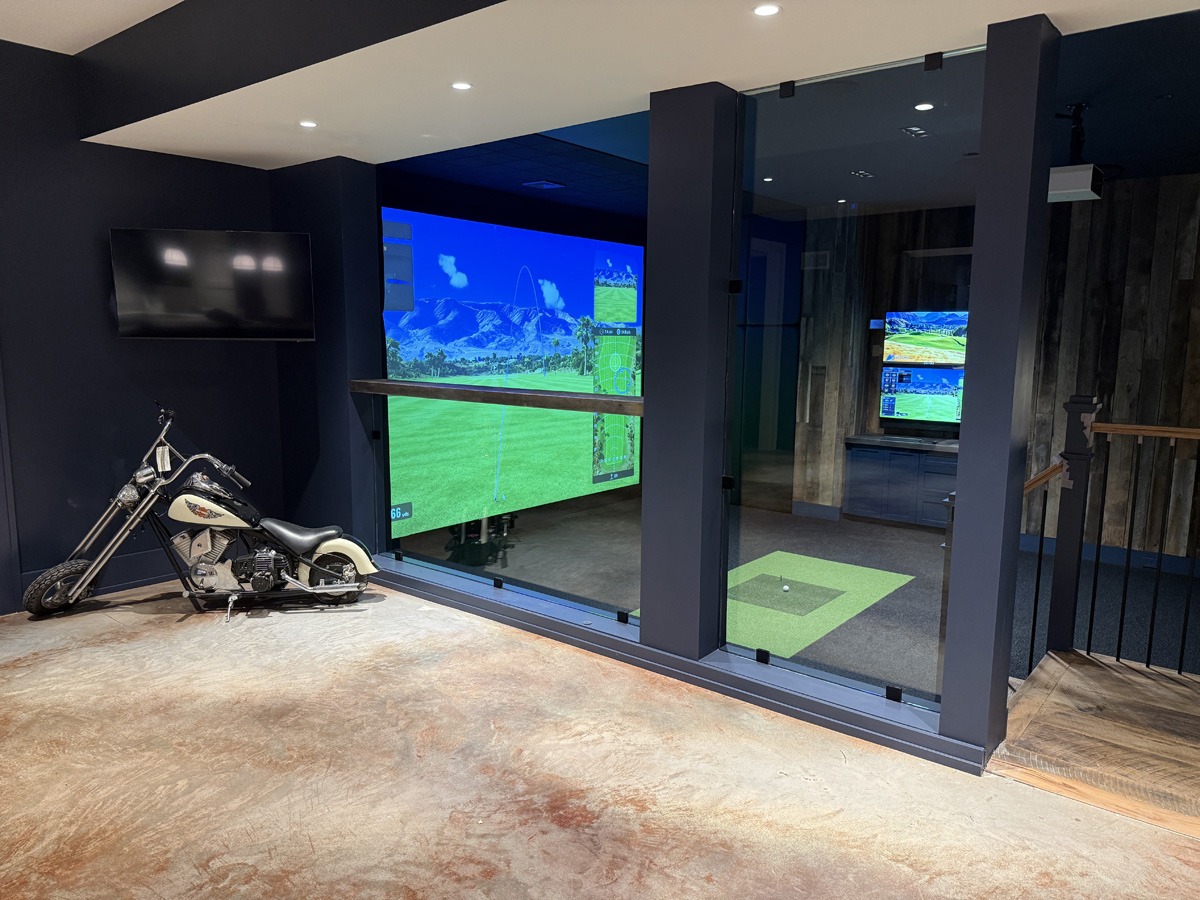
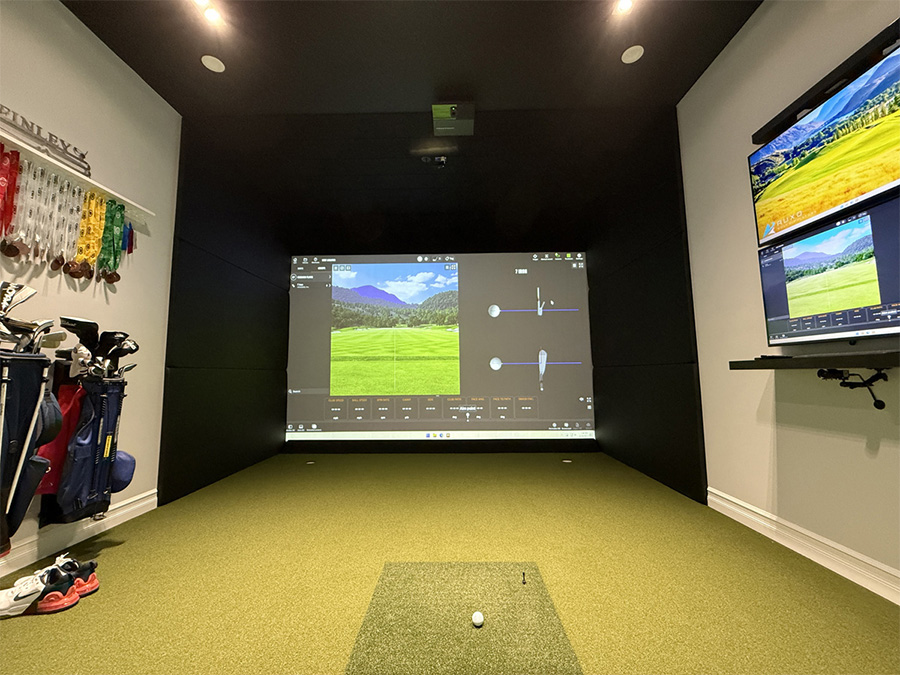
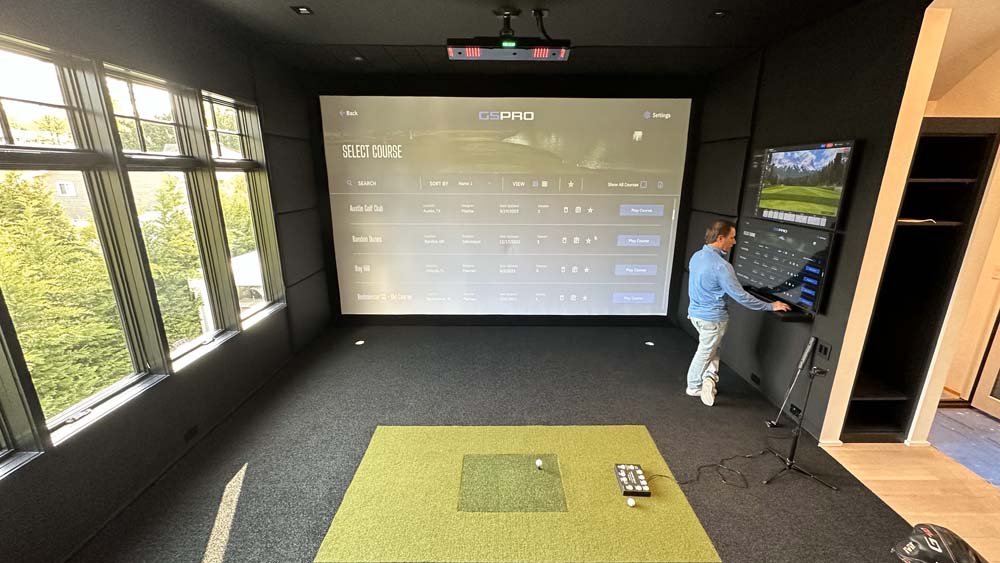
The screen is usually the visual focal point of the entire simulator. Even when nobody is hitting golf balls, it occupies a large amount of wall space. That means the best simulator rooms treat the screen and enclosure as part of the overall architecture and design rather than simply another piece of equipment.
Proportions Matter
A screen that feels too small for the wall can make an otherwise high quality simulator feel pieced together. A screen that overwhelms the room can create the opposite problem. The goal is to create a layout where the hitting position, screen, side protection, ceiling treatment, and surrounding finishes all feel balanced.
The Surrounding Finish Matters Too
The screen rarely exists by itself. Side padding, ceiling protection, turf, trim, cabinetry, lighting, and seating can all be visible at the same time. When those pieces are designed together, the screen feels built into the room instead of hung on the wall as a piece of equipment.
Clean Integration Changes the Feel of the Space
This is especially important in a finished home. A custom simulator should feel like it belongs there. Hiding unnecessary hardware, planning clean transitions, controlling visible gaps, and fitting the screen to the architecture can make the difference between a room that looks technical and a room people actually want to spend time in.
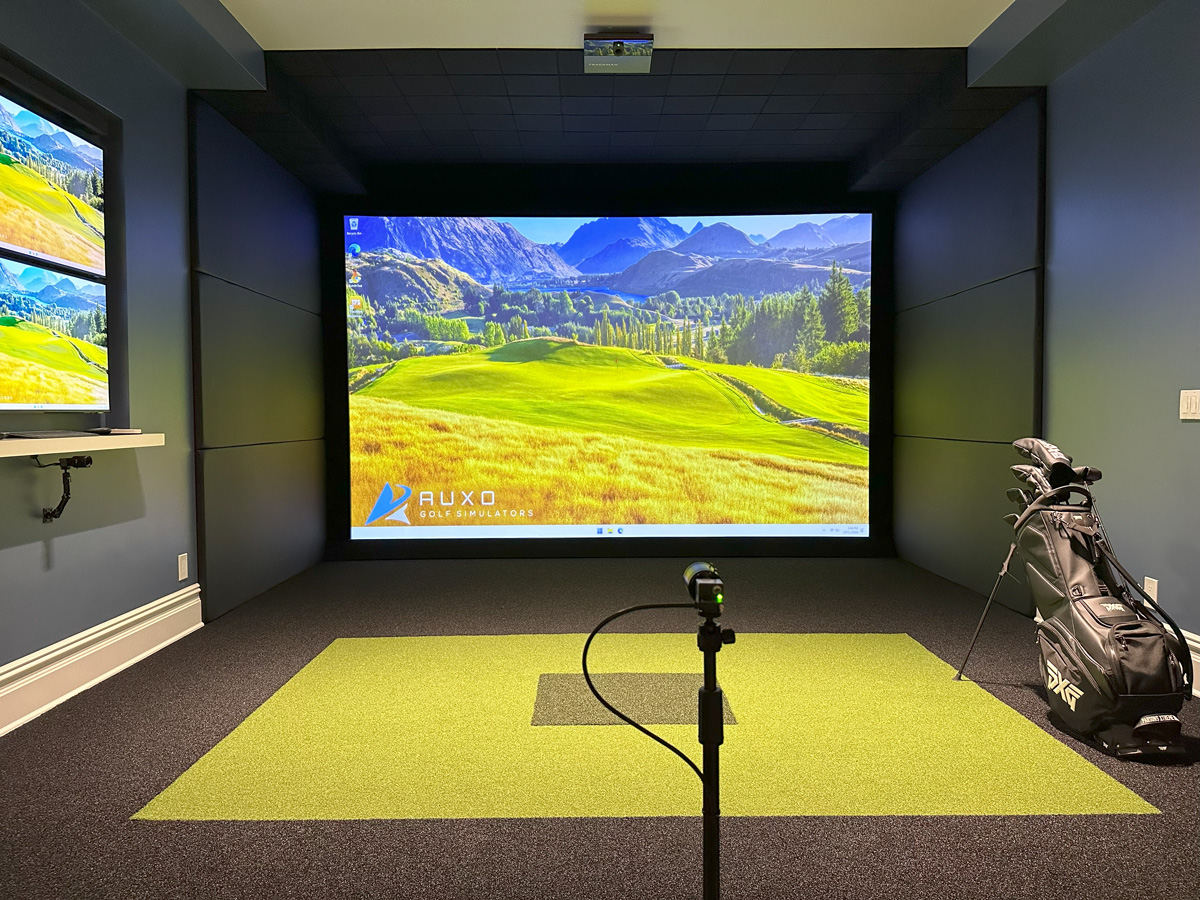
What Matters Most With Golf Simulator Impact Screens
There are a lot of details involved, but the screen should ultimately support the way the room will actually be used. A dedicated practice room may prioritize a permanent setup and maximum screen area. A media room may need more flexibility. A busy family simulator might put extra emphasis on durability, while an entertainment space may care just as much about image quality and how the screen integrates into the rest of the room.
- Enough strength for repeated full speed golf shots
- Proper tension for a clean image and controlled impact
- A size and shape that match the room and projector
- Controlled ball return and appropriate space behind the screen
- A finished design that works with padding, turf, lighting, and seating
- A fixed or retractable setup that fits how the room will be used
None of those decisions happen in isolation. The best result comes from designing the simulator as a complete room where the equipment, screen, protection, technology, and finishes all support one another.
Build a Better Golf Simulator
Reach out to AUXO Golf to create a simulator room designed around your space and how you want to use it.
Some of our work